Welcome!
Some people learn about the world from the Discovery Channel. Others explore it. Be an explorer!
Tuesday, January 22, 2019
Writing with Quill Pens
After reading a detailed and lengthy letter written by Paul Revere himself about his famous ride last week, students got first-hand knowledge of how difficult it was to write using a quill pen today in class. Students crafted the end of a goose or turkey feather so that it produced a nice writing line when dipped into "ink" (watered down tempera paint). Then students wrote a short paragraph, testing it out. The writing topic was on "betrayal", as tomorrow we begin to analyze the Revolutionary War and how the 13 colonies basically betrayed their parent country. Our conversations will focus on the question: Is betrayal always bad?
Thursday, January 17, 2019
Drum Circles
In Music, Mr. Unruh has introduced the instrument of the drum. Students have been learning how to properly play the drums and especially how drum circles work. One student would begin a simple drum beat and stop. Then, the rest of the drum circle would repeat that pattern before a new pattern is immediately created by the next student to duplicate.
Friday, December 14, 2018
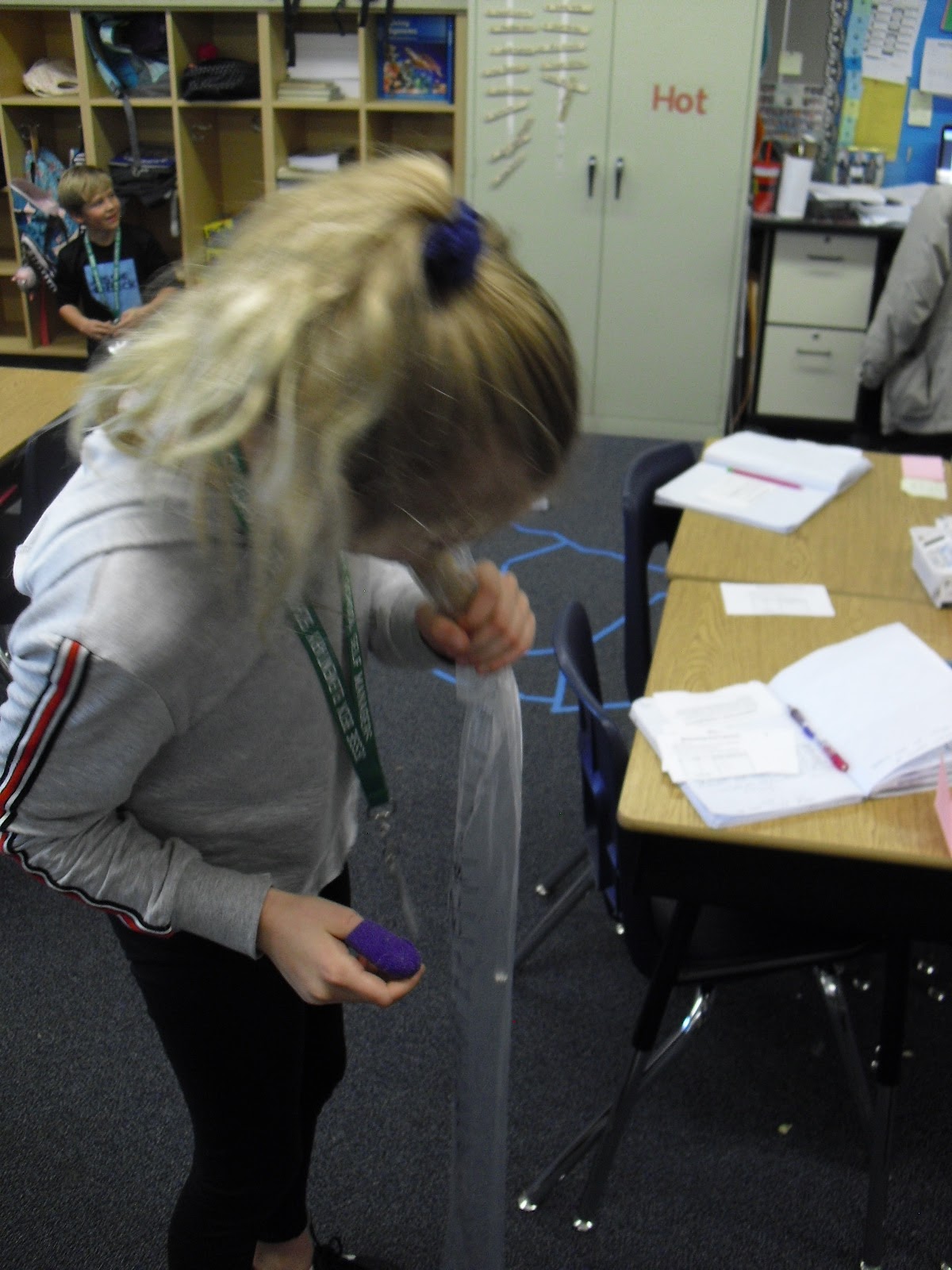
Vital Capacity of Lungs
This week in science we further explored the systems of the human body. We learned about the respiratory system and how the lungs are important for the exchange of oxygen to our red blood cells and the exchange of the waste product C02 from the blood. The connection between the circulatory system and respiratory system was focused on. In this week's lab, students measured their lung capacity to further understand how a larger person requires a larger set of lungs so that more oxygen and carbon dioxide exchanges can take place simply due to the person having more cells in his or her body. Not surprising, the larger students in class had larger lung capacity and those smaller students had less lung capacity. Students involved math by finding the average of three of their exhales.
Friday, December 7, 2018
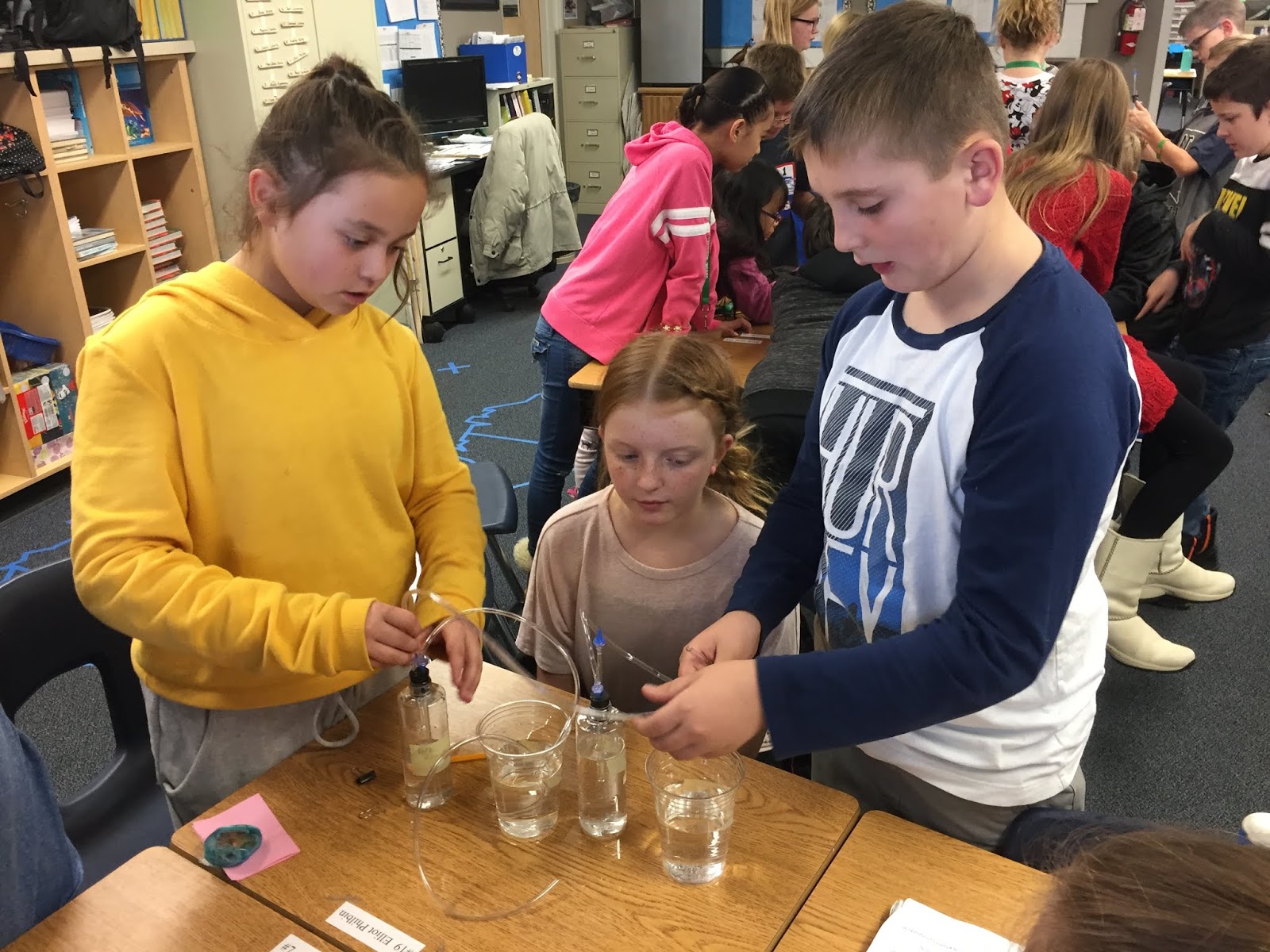
Making a Working Model of the Heart
As we continue to learn about systems, we have recently ventured into learning how the circulatory system transports nutrients to the cells in our bodiy. Thursday our class teamed up with Mrs. Espinosa's class to create a working model of the heart. Students had cups, containers, one-way valves, tubes, rubber stoppers and more. Their challenge was to use what was recently learned about the heart to assemble a model of it. Groups did amazing. In the end, all groups had a heart that could be "pumped" by squeezing one container. This pressurized the container and pushed "blood" (water) out of that ventricle into the lungs. Then the other side of the heart would "pump" by being squeezed, sending water from that ventricle to the body. Additionally, each time the squeezing stopped, water would be suctioned into that part of the heart from the "body" or the "lungs" cup. The complete cycle ensured water never ran out.
Monday, December 3, 2018
Coding the 13 Colonies
Today we started a multi-week task of coding are Spheros robot to go on a journey through the 13 original colonies. Students will have the robot start on an X outside the colonies and code it to go to Virginia, the first colony that was established. Once at that colony, it will speak and tell why it was founded and the year that it was founded. From there they will code it to go to the rest of the colonies in order of when each colony was founded on the map on the floor. Our programs will eventually be utilized by Mrs. Espinosa‘s class, as they will be able to come over and learn about the 13 colonies through our students' coding programs that they created. 

Friday, November 16, 2018
Leaf Veins
Thursday student categorized leaves according to the three main types of veins found on them. This transitioned the learning towards understanding about xylem and phloem, and that some tubes (veins) in plants take water up from roots and others take sugars (nutrients) made in leaves to the rest of the cells in the plant. We then set up an experiment with wheat seeds, placing them on top of a paper towel inside a straw. We are testing to see if plants can grow without soil. The experiment is designed so that no water can be evaporated and we will be able to measure how much water is being taken up through the xylem into the plants.
Monday, November 5, 2018
Rock Out!
Today was the rock finale. After coding on Scratch sounds for our electric guitar and making our cardboard guitar, we hooked it up to Makey Makeys and played some tunes. Each student uploaded their coded files from their USB drive to Scratch and got to play their original sounds on the guitars.
Subscribe to:
Posts (Atom)